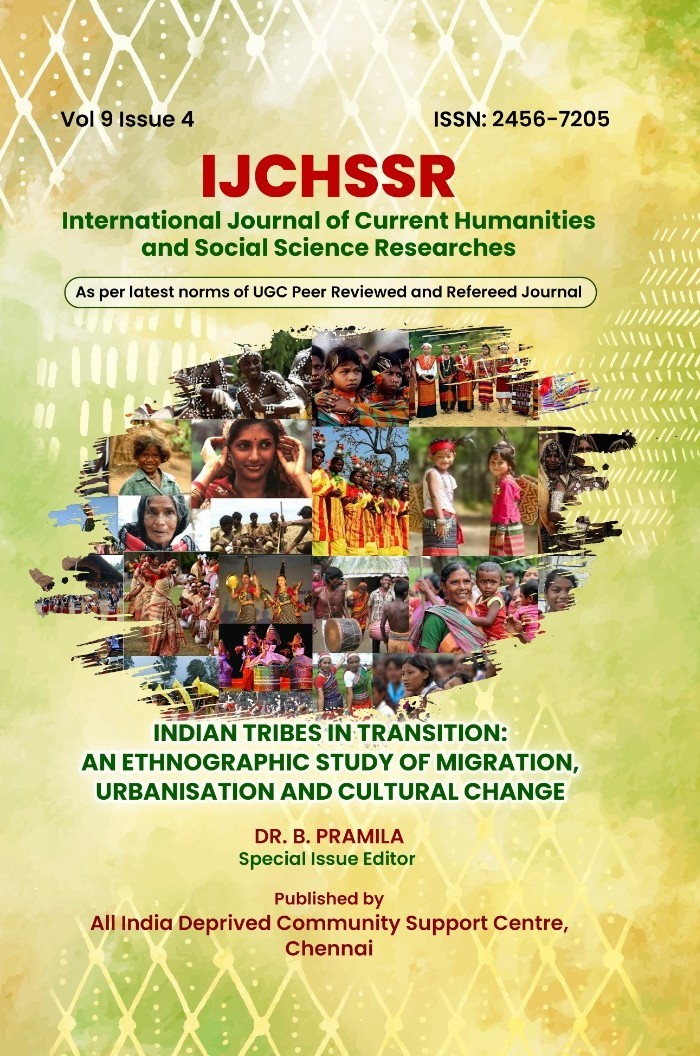
Tribal Migration And Resettlement: Social, Economic And Cultural Impacts In The 21St Century
Keywords:
Tribal migration, Resettlement, Economic displacement, Cultural identity, Indigenous rightsAbstract
In the 21st century, tribal communities face migration and resettlement challenges that arise where development, globalisation and cultural preservation intersect. These movements, whether chosen or imposed, are influenced by a combination of factors such as economic inequality, environmental harm, climate crises, conflicts and expansive infrastructure development. Although
certain tribal groups pursue migration to secure better economic prospects, most experience systemic disadvantages. Being uprooted frequently disrupts cultural traditions, weakens community bonds and increases economic vulnerability. This study examines how tribal migration and resettlement impact social, economic and cultural spheres worldwide, with illustrative examples from South Asia, Sub-Saharan Africa, Latin America and Indigenous communities in North America. Using
a qualitative secondary research methodology, it synthesizes scholarly literature, case studies, policy analyses and ethnographic accounts. Results suggest that resettlement without community participation typically undermines long-term well-being, while participatory frameworks and culturally sensitive rehabilitation can mitigate harm. The study concludes that inclusive policies
emphasizing land rights, livelihood security and cultural preservation are essential for fostering resilience among tribal communities.