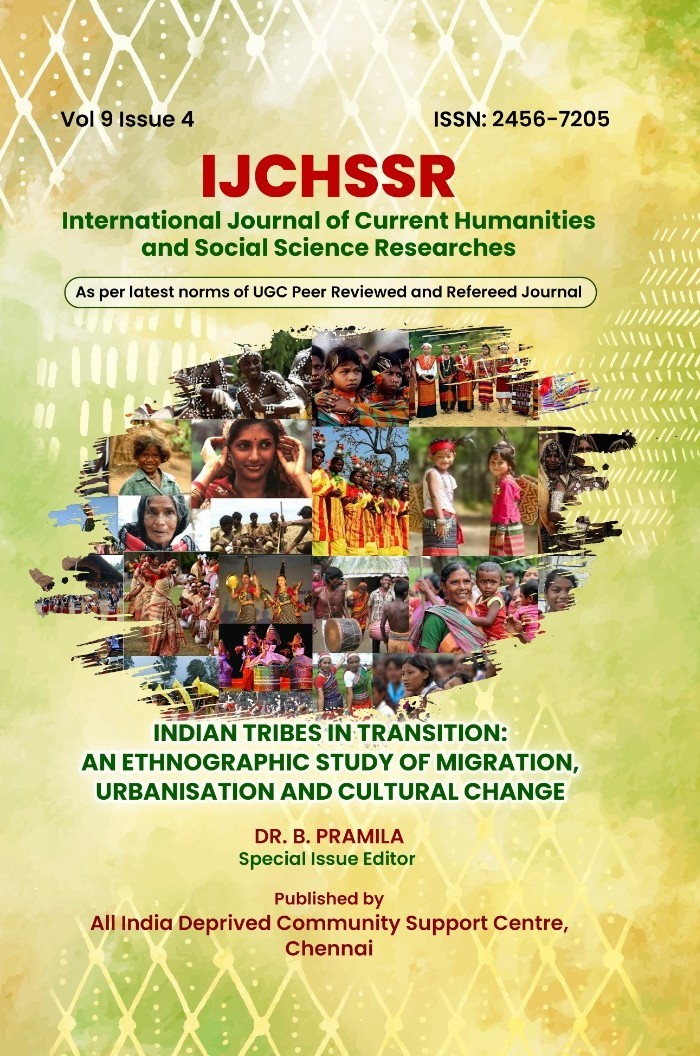
Indian Tribes in Transition: Migration, Urbanization and Cultural Dynamics
Keywords:
Indian Tribes, Migration, Urbanization, Cultural Dynamics, Cultural Hybridization, Gonds, SanthalsAbstract
Tribal people play a crucial role in the cultural fabric of India, which is frequently referred to as a mosaic of cultures, languages, and customs. Approximately 8.6% of India’s population[1], which is over 104 million people (Census of India, 2011[1]), are Scheduled Tribes. These people, which are dispersed throughout hilly regions, dense forests, deserts, and even the outskirts of cities, have historically existed as independent, close-knit communities with distinctive political, religious, and economic systems. Their way of life was closely linked to the natural world, guaranteeing ecological balance and sustainable resource utilization.
Downloads
Published
2025-12-11
How to Cite
R. Devi. (2025). Indian Tribes in Transition: Migration, Urbanization and Cultural Dynamics. International Journal of Current Humanities & Social Science Researches (IJCHSSR) ISSN: 2456-7205, Peer Reviewed and Refereed Journal, 9(4), 161–166. Retrieved from https://journal.indiancommunities.org/index.php/ijchssr/article/view/305